Total Pageviews

Showing posts with label China-UNESCO 38. Show all posts

Sunday, July 1, 2012

Classical Gardens of Suzhou

Card No. 148
The Classical Gardens of Suzhou are a group of gardens in Suzhou region, Jiangsu province which have been added to the UNESCO World Heritage List.

Spanning a period of almost one thousand years, from the Northern Song to the late Qing dynasties (11th-19th century), these gardens, most of them built by scholars, standardized many of the key features of classical Chinese garden design with constructed landscapes mimicking natural scenery of rocks, hills and rivers with strategically located pavilions and pagodas.

Though smaller and less elaborate than another well-known types of Chinese garden, the opulent Imperial Gardens and Palaces in Beijing, best exemplified by the Beihai Park, Zhongshan Park, Old Summer Palace and Summer Palace; the elegant aesthetics and subtlety of these scholar's gardens in many ways contrast with the grandeur of the former, and their delicate style and features are often imitated by various gardens in other parts of China, including the Imperial Gardens, such as those in the Chengde Mountain Resort. According to UNESCO, the gardens of Suzhou "represent the development of Chinese landscape garden design over more than two thousand years," and they are the "most refined form" of garden art.

These landscape gardens flourished in the mid-Ming to early-Qing dynasties, resulting in as much as 200 private gardens. Today, there are 69 preserved gardens in Suzhou, and all of them are designated as protected "National Heritage Sites." In 1997 and 2000, eight of the finest gardens in Suzhou along with one in the nearby ancient town of Tongli were selected by UNESCO as a World Heritage Site to represent the art of Suzhou-style classical gardens

Information Obtained From Wikipedia, the free encyclopedia


View of Couple's Retreat Garden
Hanshan Temple
Humble Administrator's Garden
Lingering Garden
Lion Forest Garden
Master-of-Nets Garden
The Mountain villa with Embracing Beauty
The Canglang Pavilion
The Retreat and Reflection Garden
Tiger Hill

Tuesday, August 3, 2010

Thursday, April 22, 2010

Old Town of Lijiang

Card # 77
The town has a history going back more than 800 years and was once a confluence for trade along the old tea horse road. The Lijiang old town is famous for its orderly system of waterways and bridges. The old town of Lijiang differs from other ancient Chinese cities in architecture, history and the culture of its traditional residents the Nakhi people, therefore people there are called 胖金哥 and 胖金妹 (male and female respectively).

Lijiang old town (including Dayan, Baisha and Shuhe) was registered on the UNESCO World Heritage List in December 4, 1997. Since then, the local government has taken more responsibility for the development and protection of the old city. Lijiang's tourism also boomed, and travellers from around the world flooded in; although many locals fear that due to much of the development, the old town of Lijiang will lose its appeal. Read more
Information Obtained From Wikipedia, the free encyclopedia

Monday, March 1, 2010

Ancient Building Complex in the Wudang Mountains

Card # 60This postcard sent to me by one Chinese friend

In years past, the mountains of Wudang were known for the many Taoist monasteries to be found there, monasteries which became known as an academic centre for the research, teaching and practise of meditation, Chinese martial arts, traditional Chinese medicine, Taoist agriculture practices and related arts. As early as the Eastern Han Dynasty (25–220 AD), the mountain attracted the Emperor's attention. During the Tang Dynasty (618–907), the first site of worship—the Five Dragon Temple—was constructed. The monasteries were emptied, damaged and then neglected during and after the Cultural Revolution of 1966–1976, but the Wudang mountains have lately become increasingly popular with tourists from elsewhere in China and abroad due to their scenic location and historical interest. The monasteries and buildings were made a UNESCO World Heritage Site in 1994. The palaces and temples in Wudang, which was built as an organized complex during the Ming Dynasty (14th–17th centuries), contains Taoist buildings from as early as the 7th century. It represents the highest standards of Chinese art and architecture over a period of nearly 1,000 years. Noted temples include the Golden Hall, Nanyan Temple and the Purple Cloud Temple. Read more
Information Obtained From Wikipedia, the free encyclopedia

Sunday, January 10, 2010

Wulingyuan Scenic and Historic Interest Area

Card # 44 This postcard sent to me by one Chinese friend

Wulingyuan is a scenic and historic interest area in Hunan Province, China, famous for its approximately 3,100 tall quartzite sandstone pillars, some over 800 meters in height, which are a kind of karst formation. It is part of Zhangjiajie city, about 270km from the capital of Hunan Province, Changsha. It lies between the coordinates of 29°16′0″N 110°22′0″E / 29.266667°N 110.366667°E / 29.266667; 110.366667Coordinates: 29°16′0″N 110°22′0″E / 29.266667°N 110.366667°E / 29.266667; 110.366667 and 29°24′0″N 110°41′0″E / 29.4°N 110.683333°E / 29.4; 110.683333. It was designated a UNESCO World Heritage Site in 1992. Wulingyuan forms part of the Wuling Range.

Information Obtained From Wikipedia, the free encyclopedia

Mount Wuyi

Card # 43
This postcard sent to me by one Chinese friend.

The mountains cover an area of 60 km². In 1999, Mount Wuyi entered UNESCO's list of World Heritage Sites, both natural and cultural. It is the most outstanding biodiversity conservation zone of Southeast China. Numerous types of tea are produced around Mount Wuyi; it is the origin of the real Da Hong Pao tea and Lapsang souchong, further described in Wuyi tea. Read more

The Yunu hill, the "symbol" of Wuyi Mountains

Information and Image Obtained From Wikipedia, the free encyclopedia

Tuesday, October 20, 2009

Mount Huangshan

Card # 34 These postcard sent to me by Jue Huang

Mount Huang, added in UNESCO World Heritage Site in 1990. Its well known for scenery, sunsets, peculiarly-shaped granite peaks, Huangshan Pine trees, and views of the clouds from above as what can see from my postcard. It's gained its unique rock formation in the Quaternary Glaciation around 100 million years ago. During the Qin Dynasty, Mount Huang was known as Yishan (Mount Yi). In 747 AD, its name was changed to Huangshan (Mount Huang) by imperial decree the name is commonly thought to have been coined in honor of Huang Di (the Yellow Emperor), a legendary Chinese emperor and the mythological ancestor of the Han Chinese one legend states that Mount Huang was the location from which the Yellow Emperor ascended to Heaven. Another legend states that the Yellow Emperor "cultivated moral character and refined pills of immortality in the mountains, and in so doing gave the mountains his name. The first use of this name "Mount Huang" is often attributed to Chinese poet Li Bai. Mount Huang was fairly inaccessible and little-known in ancient times, but its change of name in 747 AD seems to have brought the area more attention; from then on, the area was visited frequently and many temples were built there. Read more

Monday, October 19, 2009

Wulingyuan Scenic and Historic Interest Area

Card # 32 These postcard sent to me by Jue Huang

Is a scenic and historic interest area in Hunan Province, China, famous for its approximately 3,100 tall quartzite sandstone pillars, some over 800 meters in height, which are a kind of karst formation. It is part of Zhangjiajie city, about 270km from the capital of Hunan Province, Changsha. It was designated a UNESCO World Heritage Site in 1992. Wulingyuan forms part of the Wuling Range.

Wednesday, October 7, 2009

The Great Wall, China

Card # 30
These postcard sent to me by Jue Huang

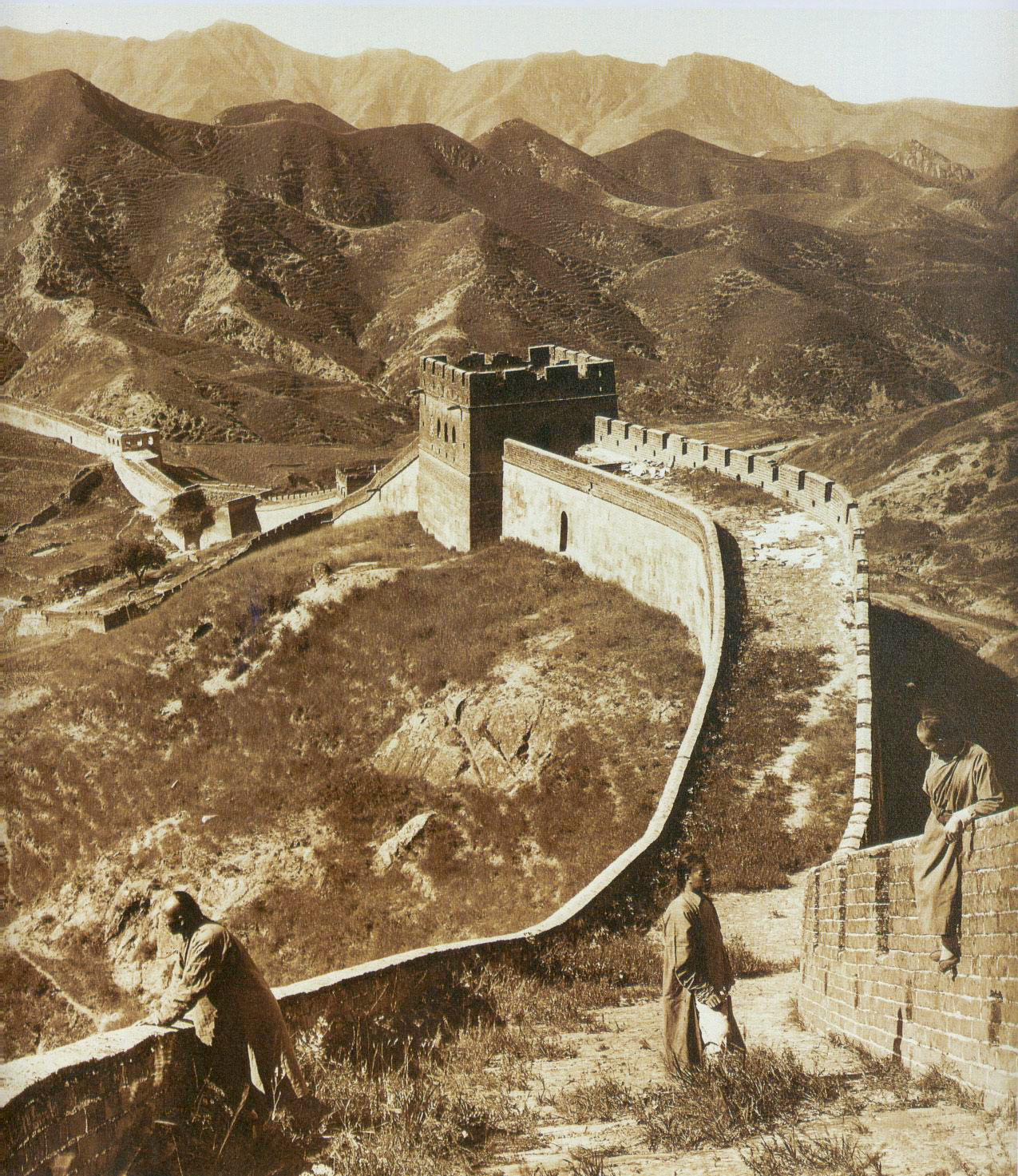
"The long wall of 10,000 is a series of stone and earthen fortifications in northern China, built, rebuilt, and maintained between the 5th century BC and the 16th century to protect the northern borders of the Chinese Empire from Xiongnu attacks during various successive dynasties. The Great Wall stretches from Shanhaiguan in the east to Lop Nur in the west, along an arc that roughly delineates the southern edge of Inner Mongolia. Has been World Heritage Site since 1987. Read more

Photograph of the Great Wall in 1907

Information and Image Obtained From Wikipedia, the free encyclopedia

Thursday, August 6, 2009

Mount Taishan, China

Card # 9 (My first UNESCO Postcard from Postcrossing)
These postcard sent to me by Li Zhe from Postcrossing
nother UNESCO World Heritage Postcard i received from a Postcrossing friend. Mount Tai entered UNESCO World Heritage Site 1987. Mount Tai resided in China Shandong Province, one of the Five Sacred Mountains with rich historical and cultural. It is associated with sunrise, birth, and renewal, and is often regarded the foremost of the five. The temples on its slopes have been a destination for pilgrims for 3,000 years. Religious worship of Mount Tai has a tradition of 3,000 years
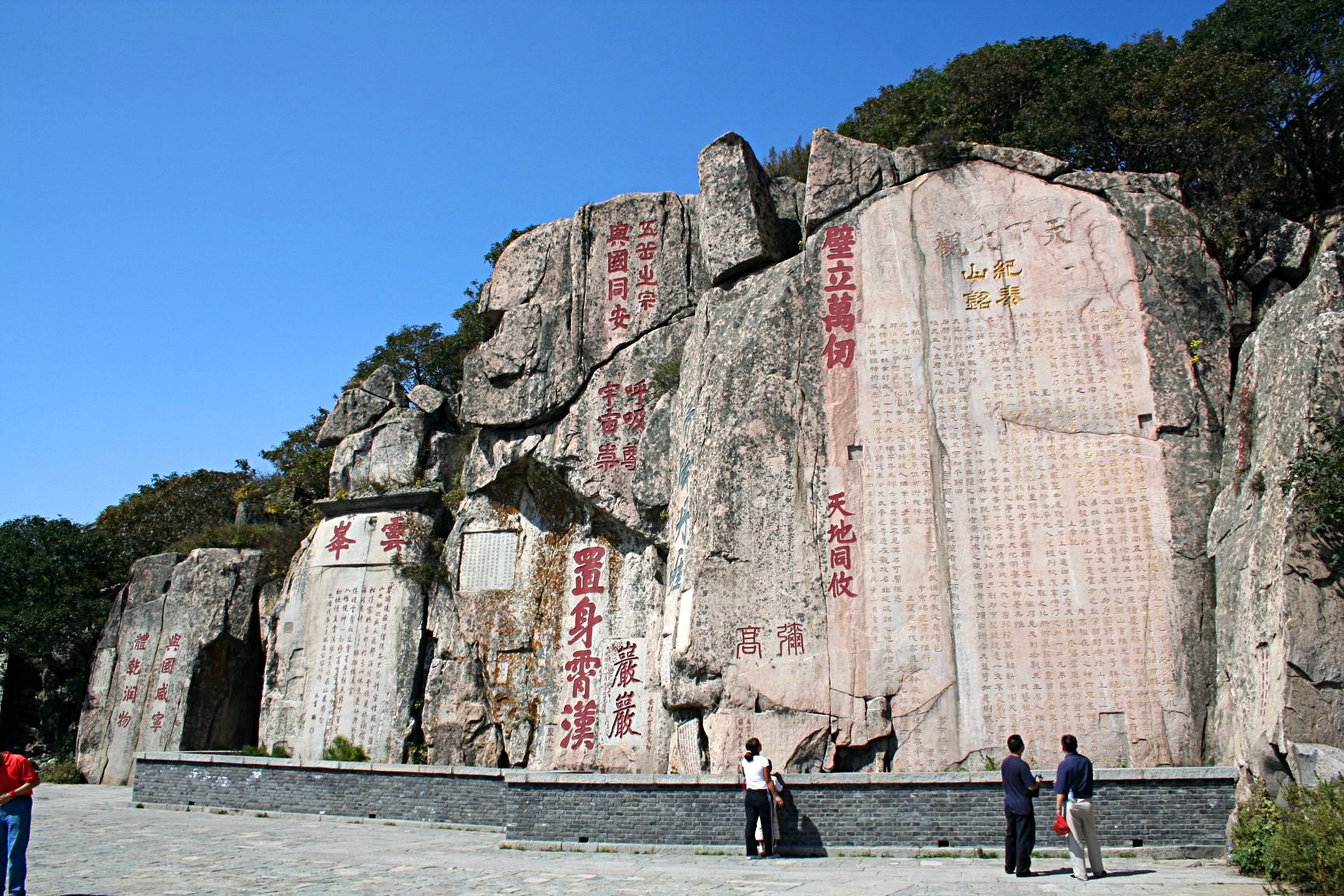
Stone inscriptions at Mount Tai

The Temple of the God of Mount Tai, known as the Dai Temple (Dai Miao), is the largest and most complete ancient building complex in the area. It is located at the foot of Mount Tai in the city of Tai'an and covers an area of 96,000 square meters. The temple was first built during the Qin Dynasty. Since the time of the Han Dynasty (206 BC – 220 AD), its design has been a replica of the imperial palace, which makes it one out of three extant structures in China with the features of an imperial palace (the other two are the Forbidden City and the Confucius Temple in Qufu). The temple has five major halls and many small buildings. The centerpiece is the Palace of Heavenly Blessings (Tian Kuang), built in 1008, during the Northern Song Dynasty. The hall houses the mural painting "The God of Mount Tai Making a Journey", dated to the year 1009. The mural extends around the eastern, western and northern walls of the hall and is 3.3 metres high and 62 metres long. The theme of the painting is an inspection tour by the god. Next to the Palace of Heavenly Blessings stand the Yaocan Pavilion and the entrance archway as well as the Bronze Pavilion in the northeast corner. The Dai Temple is surrounded by the 2,100 year-old Han Dynasty cypresses.


Information and Image Obtained From Wikipedia, the free encyclopedia

LinkWithin

Related Posts with Thumbnails