Card # 83 This postcard sent to me by Emil Levitchi
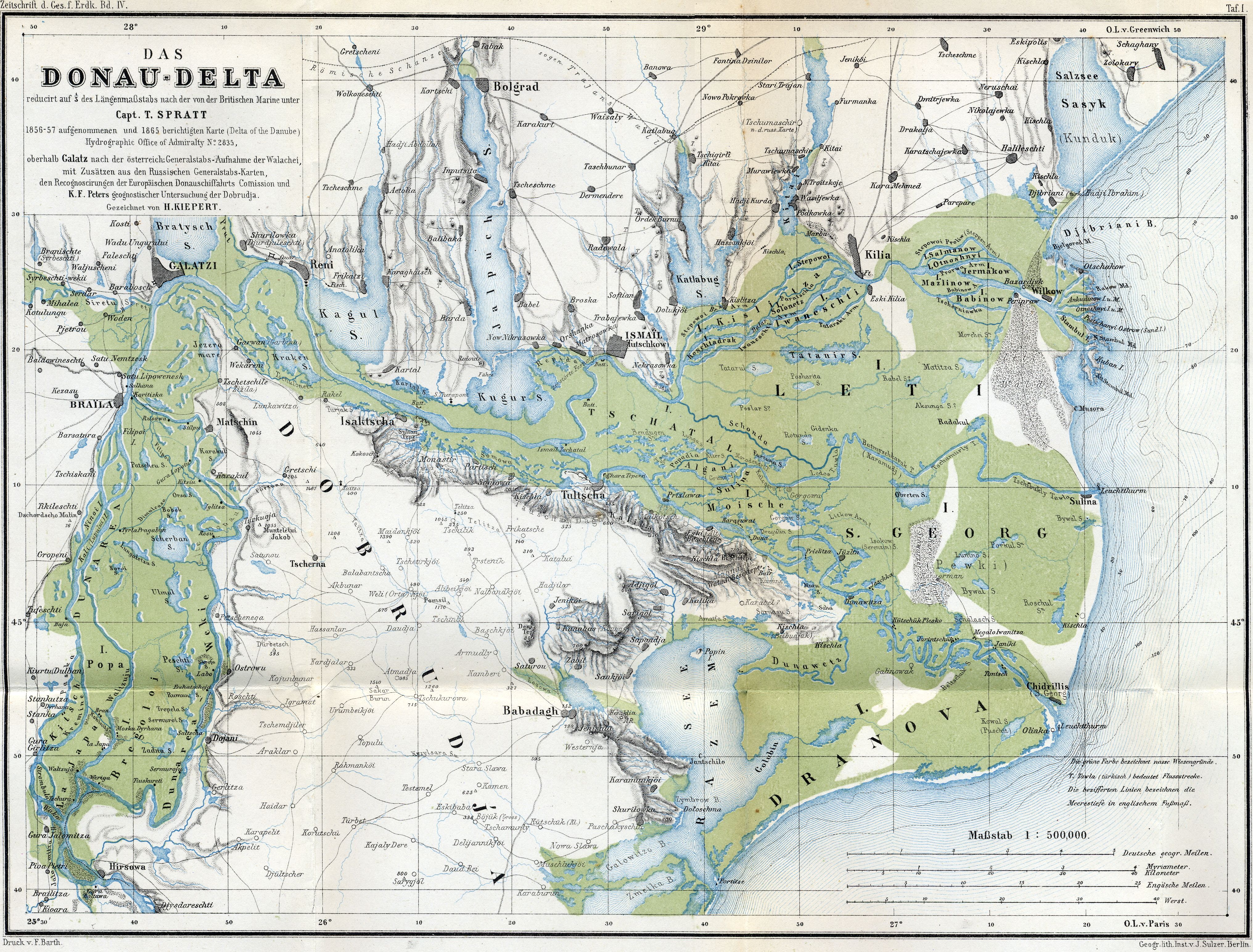
The Danube Delta is the second largest river delta in Europe, after the Volga Delta, and is the best preserved on the continent. The greater part of the Danube Delta lies in Romania (Tulcea county), while its northern part, on the left bank of the Chilia arm, is situated in Ukraine (Odessa Oblast). The approximate surface is 4152 km², of which 3446 km² are in Romania.
If the lagoons of Razim-Sinoe (1015 km² of which 865 km² water surface; situated in the south, but attached to the Danube Delta from geological and ecological perspectives, as well as being the combined territory of the World Heritage Site) are to be added, the considered area of the Danube Delta grows to 5165 km². Read more
The Danube Delta in 1867, as a part of the Ottoman Empire
Information and Image Obtained From Wikipedia, the free encyclopedia
Total Pageviews
Showing posts with label Romania-UNESCO 7. Show all posts
Monday, July 12, 2010
Thursday, July 1, 2010
Churches of Moldavia
Card # 78
This postcard sent to me by Mircea Ostoia
These seven churches in northern Moldavia are unique in Europe. There frescoes represent complete cycles of religious murals on all facades and they are considered masterpieces of Byzantine Art. Since 1993 they have been listed by UNESCO as a World Heritage Site. Read more
This postcard sent to me by Mircea Ostoia
These seven churches in northern Moldavia are unique in Europe. There frescoes represent complete cycles of religious murals on all facades and they are considered masterpieces of Byzantine Art. Since 1993 they have been listed by UNESCO as a World Heritage Site. Read more
Sunday, September 6, 2009
Historic Centre of Sighişoara
Card # 19 
These postcard sent to me by Calin
The Sighisoara Citadel is the old historic center of the town of Sighişoara , Romania, built in the 12th century by Saxon colonists under the Latin name Castrum Sex. It is an inhabited medieval citadel that, in 1999, was designated a UNESCO World Heritage Site for its 850-year-old in 1999 for testament to the history and culture of the Transylvanian Saxons.
Birthplace of Vlad III the Impaler, also known as Dracula, Sighişoara hosts, every year, a medieval festival where arts and crafts blend with rock music and stage plays. The city marks the upper boundary of the Land of Sachsen. Like its bigger brothers, Sibiu (Hermannstadt - The European Cultural Capital in 2007) and Braşov (Kronstadt), Sighişoara exhibits architecture typical of medieval Germany. During the Communist era, this German area was preserved, and the original architecture is still in place.
Information Obtained From Wikipedia, the free encyclopedia

These postcard sent to me by Calin
The Sighisoara Citadel is the old historic center of the town of Sighişoara , Romania, built in the 12th century by Saxon colonists under the Latin name Castrum Sex. It is an inhabited medieval citadel that, in 1999, was designated a UNESCO World Heritage Site for its 850-year-old in 1999 for testament to the history and culture of the Transylvanian Saxons.
Birthplace of Vlad III the Impaler, also known as Dracula, Sighişoara hosts, every year, a medieval festival where arts and crafts blend with rock music and stage plays. The city marks the upper boundary of the Land of Sachsen. Like its bigger brothers, Sibiu (Hermannstadt - The European Cultural Capital in 2007) and Braşov (Kronstadt), Sighişoara exhibits architecture typical of medieval Germany. During the Communist era, this German area was preserved, and the original architecture is still in place.
Information Obtained From Wikipedia, the free encyclopedia
Thursday, August 27, 2009
Monastery of Horezu
Card # 17 
These postcard sent to me by Calin
Inscribed by UNESCO World Heritage Site in 1993. Founded by Prince Constantin Brancoveanu on year 1690 in the town of Horezu Wallachia, Romania. t is considered to be a masterpiece of "Brâncovenesc style", known for its architectural purity and balance, the richness of its sculpted detail, its treatment of religious compositions, its votive portraits, and its painted decorative works.
The Brâncovenesc style, which can be found at several other churches and monasteries in Wallachia, is the only true and original Romanian style and is called "Brancoveanu art" by the name of the ruler who, in a period of constant battles between the world powers of that time, put cultural development of the country above everything and made it the goal of his life. Constructed between 1690 and 1693. he architecture of the church was designed in a tri-apses style that imitates the structural plan of the Episcopal Church from Curtea de Arges; only the porch was constructed in the architectural style that flourished during Constantin Brancoveanu’s reign.

The exterior of the church is decorated with rectangular panels and niches that are ornamented with a fine geometrical pattern whose dominant element is the circle: a cornice made of sculpted marble frames the entrance door, above which there is the votive inscription that displays the escutcheon (coat of arms) of Walachia, as well as that of the Cantacuzino family of voivodes. The paintings inside the church, which are of inestimable artistic value, were executed by master-painters Constantinos, Ioan, Andrei, Stan, Neagoe, and Ioachim. The paintings contain a gallery of portraits of the fallowing voivodes and their families: Brancoveanu, Basarab, and Cantacuzino.
The iconostasis was sculpted in lime tree wood, which was overlaid with gold; the silver votive lights (icon lamps) were donated by Maria Doamna, the wife of Constantin Brancoveanu Voivode. The holy establishment underwent major repairs and was completely renovated in 1827 and in 1872, as well as between 1907 and 1912 and between 1954 and 1964.
Inside the church, there is the funeral monument of Constantin Brancoveanu Voivode – although the voivode was actually interred inside the Church of Great Martyr George the Trophy-Bearer in Bucharest. Inside the Hurezi Monastery there is also the tomb of Archimandrite Ioan, the first abbot of the establishment, and other tombs as well. The following structures were accommodated within the monastery grounds: the hospital, whose church has as dedication day the ”Dormition of the Birthgiver of Good” and which was founded by Maria Doamna, (between 1696 and 1699) and painted by masters Preda Nicolae and Ianache; the monastic chapel, which was founded by Constantin Brancoveanu Voivode between 1696 and 1697; the Skete of Proto-Martyr Stephen the Archdeacon, which was founded by Prince Stefan, the son of Constantin Brancoveanu Voivode in 1703, and painted by masters Ianache, Istrate, and Ranite, the Skete of the Holy Apostles Peter and Paul, and the Skete of the Apostle and Evangelist John the Theologian, which was founded by Father Ioan, the abbot of the establishment, in 1698.
The monastery possesses one of the most remarkable collections of liturgical objects – some of which date from the time that the holy establishment was founded. The paintings and the sculptures in stone and in wood are dating from the epoch of Constantin Brancoveanu Voivode. The monastery also shelters a valuable library, which incorporated approximately four thousand volumes. This holy establishment is the most comprehensive and outstanding complex within the pattern of the Brancoveanu style ever constructed in Romania.
On June 20th, 1992, the Holy Synod of the Romanian Orthodox Church decreed the canonization of Constantin Brancoveanu Voivode, of his sons Constantin, Stefan, Radu, Matei, and of the Counselor Ianache as holy martyrs, instituting the celebration of their dedication day on August 16th.
Information and Image Obtained from Horezu Monastery at Romanian-monasteries.go.ro, Wikipedia, the free encyclopedia

These postcard sent to me by Calin
Inscribed by UNESCO World Heritage Site in 1993. Founded by Prince Constantin Brancoveanu on year 1690 in the town of Horezu Wallachia, Romania. t is considered to be a masterpiece of "Brâncovenesc style", known for its architectural purity and balance, the richness of its sculpted detail, its treatment of religious compositions, its votive portraits, and its painted decorative works.
The Brâncovenesc style, which can be found at several other churches and monasteries in Wallachia, is the only true and original Romanian style and is called "Brancoveanu art" by the name of the ruler who, in a period of constant battles between the world powers of that time, put cultural development of the country above everything and made it the goal of his life. Constructed between 1690 and 1693. he architecture of the church was designed in a tri-apses style that imitates the structural plan of the Episcopal Church from Curtea de Arges; only the porch was constructed in the architectural style that flourished during Constantin Brancoveanu’s reign.
The exterior of the church is decorated with rectangular panels and niches that are ornamented with a fine geometrical pattern whose dominant element is the circle: a cornice made of sculpted marble frames the entrance door, above which there is the votive inscription that displays the escutcheon (coat of arms) of Walachia, as well as that of the Cantacuzino family of voivodes. The paintings inside the church, which are of inestimable artistic value, were executed by master-painters Constantinos, Ioan, Andrei, Stan, Neagoe, and Ioachim. The paintings contain a gallery of portraits of the fallowing voivodes and their families: Brancoveanu, Basarab, and Cantacuzino.
The iconostasis was sculpted in lime tree wood, which was overlaid with gold; the silver votive lights (icon lamps) were donated by Maria Doamna, the wife of Constantin Brancoveanu Voivode. The holy establishment underwent major repairs and was completely renovated in 1827 and in 1872, as well as between 1907 and 1912 and between 1954 and 1964.
Inside the church, there is the funeral monument of Constantin Brancoveanu Voivode – although the voivode was actually interred inside the Church of Great Martyr George the Trophy-Bearer in Bucharest. Inside the Hurezi Monastery there is also the tomb of Archimandrite Ioan, the first abbot of the establishment, and other tombs as well. The following structures were accommodated within the monastery grounds: the hospital, whose church has as dedication day the ”Dormition of the Birthgiver of Good” and which was founded by Maria Doamna, (between 1696 and 1699) and painted by masters Preda Nicolae and Ianache; the monastic chapel, which was founded by Constantin Brancoveanu Voivode between 1696 and 1697; the Skete of Proto-Martyr Stephen the Archdeacon, which was founded by Prince Stefan, the son of Constantin Brancoveanu Voivode in 1703, and painted by masters Ianache, Istrate, and Ranite, the Skete of the Holy Apostles Peter and Paul, and the Skete of the Apostle and Evangelist John the Theologian, which was founded by Father Ioan, the abbot of the establishment, in 1698.
The monastery possesses one of the most remarkable collections of liturgical objects – some of which date from the time that the holy establishment was founded. The paintings and the sculptures in stone and in wood are dating from the epoch of Constantin Brancoveanu Voivode. The monastery also shelters a valuable library, which incorporated approximately four thousand volumes. This holy establishment is the most comprehensive and outstanding complex within the pattern of the Brancoveanu style ever constructed in Romania.
On June 20th, 1992, the Holy Synod of the Romanian Orthodox Church decreed the canonization of Constantin Brancoveanu Voivode, of his sons Constantin, Stefan, Radu, Matei, and of the Counselor Ianache as holy martyrs, instituting the celebration of their dedication day on August 16th.
Information and Image Obtained from Horezu Monastery at Romanian-monasteries.go.ro, Wikipedia, the free encyclopedia
Subscribe to:
Posts (Atom)

